
Campaigns are coming soon. We are putting the final touches in place — check back shortly to start or support a campaign.

Hairraiser
← All guides
Basics

DHT and genetics: the real drivers of pattern hair loss
7 min readUpdated Aug 2026Sourced from the NHS and the peer-reviewed literature

The androgen pathway

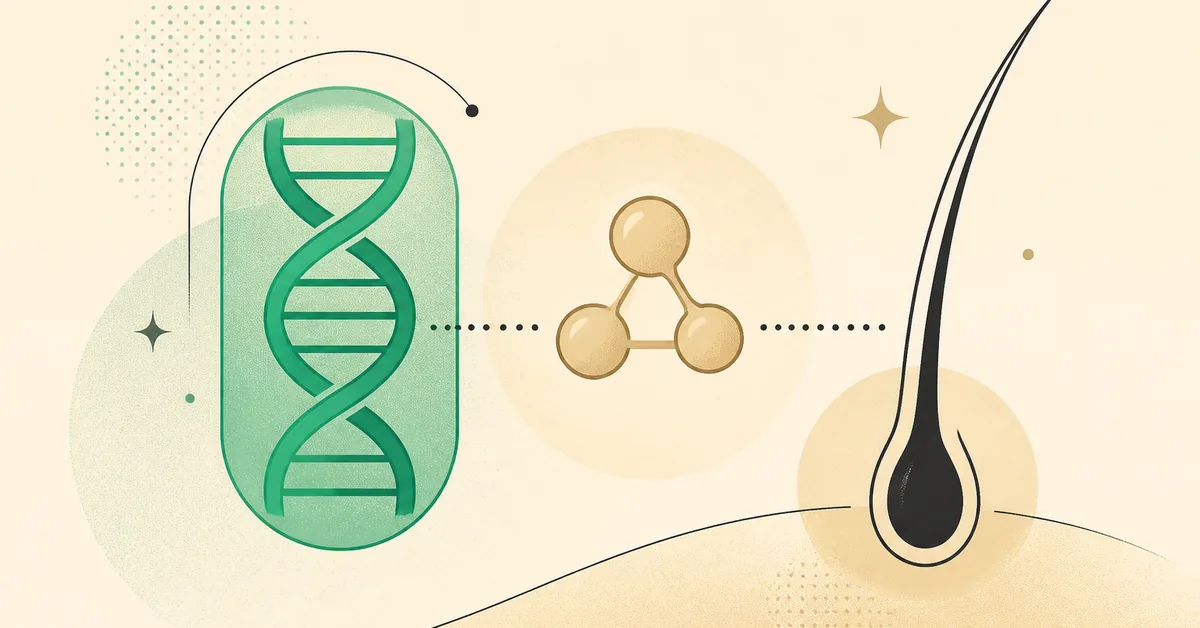
Pattern hair loss runs through a single hormonal lever, and the biology is worth having once, clearly. The mechanism behind dht hair loss involves an enzyme called 5-alpha-reductase, which converts testosterone into a stronger androgen called dihydrotestosterone (DHT). In a genetically sensitive scalp, DHT binds receptors in the follicle and shortens the growth cycle. Each cycle produces a thinner, shorter hair, a process called miniaturisation. Over time the follicle produces progressively weaker hair until it stops, leaving a miniaturised follicle that is not "dead", it is in a suspended state. That is the whole biological story of why the hair thins in the classic pattern.

An enzyme, 5-alpha-reductase, converts testosterone into a stronger androgen called dihydrotestosterone (DHT).
In a genetically sensitive scalp, DHT binds receptors in the follicle and shortens the growth cycle, each cycle produces a thinner, shorter hair, a process called miniaturisation.
Over time the follicle produces progressively weaker hair until it stops, leaving a miniaturised follicle that is not "dead", it is in a suspended state.

Genetics is not destiny, but it sets the map

The sensitivity of your follicles to DHT is what is inherited, not "baldness" as a single gene. That distinction matters for understanding whether genetics and hair loss go together in the way people expect.

The pattern (which follicles respond, how strongly) is largely set by inherited sensitivity, influenced through both sides of the family, not, as the old myth claims, only the mother’s side.
But a genetic tendency is a starting map, not a fixed outcome: how much you act on it via medication, timing, and any surgery is in your control.

What knowing this changes, practically

This is not trivia. Understanding the DHT mechanism changes what you should and should not worry about, and it explains several things that otherwise seem mysterious about hair loss.

"Too much testosterone" is a myth. Having high testosterone does not itself cause loss, the sensitivity of the follicle to DHT is what matters.
It explains why medications target one lever. Finasteride works by lowering DHT, which is a direct attack on the mechanism behind pattern loss.
It explains the pattern. Because sensitivity is regional (crown and temples first), the thinning has the recognisable shape the Norwood scale describes.
It explains why a transplant works. Donor hair at the back and sides is largely not programmed to respond to DHT the same way, so moving it to a thinning zone keeps it growing.
It explains the "not your fault" part. This is a normal, inherited, hormonal process most men will encounter, not a hygiene failure, not a character flaw.

The honest takeaway

The biological story is short: DHT shortens the hair cycle in follicles that are genetically sensitive to it. Everything else, the shape it takes, whether to act, when to act, follows from that one mechanism. Knowing it gives you the foundation to read patient guides, weigh medication honestly, and ask a surgeon the right questions, instead of parroting marketing.

Ready to take the next step?

Start a campaign with a real quote from a real clinic — the community funds the rest.

Start a campaign

Educational content only — not medical advice. Costs vary by market and case; get quotes in writing.