
Finasteride vs minoxidil: the evidence, honestly
Two different jobs
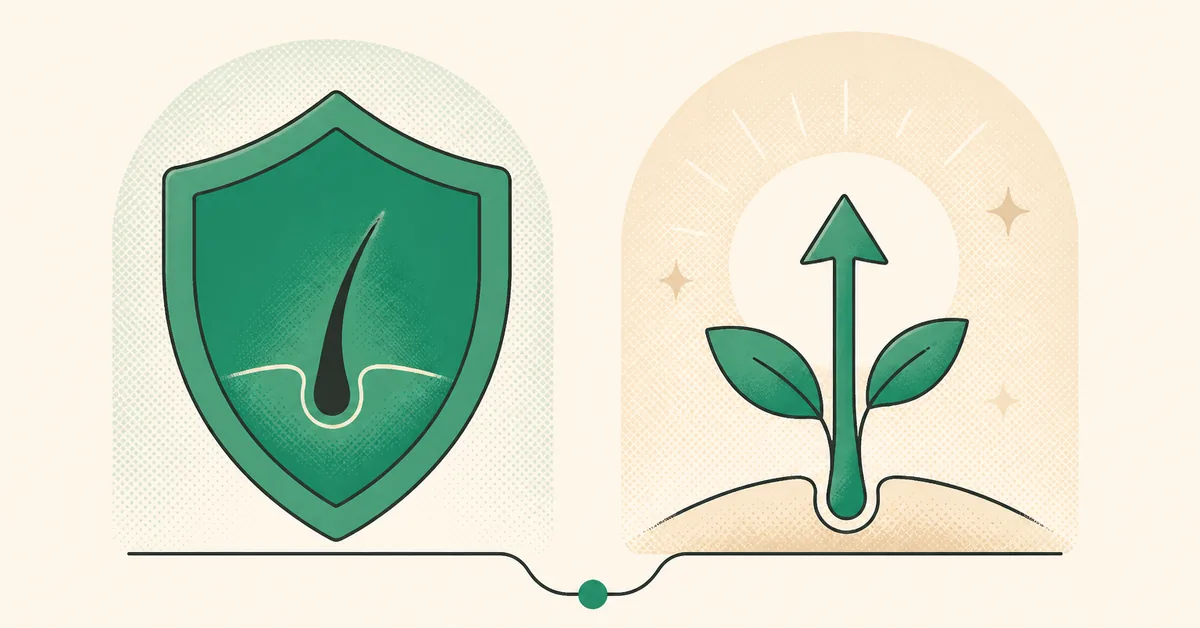
Finasteride and minoxidil are the two medicines with the most evidence behind them for male pattern hair loss, and they are in fact the only two FDA-approved drugs for it. But they do different things, and understanding the difference is the whole game. The NHS names finasteride and minoxidil as the main treatments for male pattern baldness, adding they do not work for everyone and only work for as long as they are used. The FDA approved both for this condition as of 2017.
Finasteride: the evidence
Finasteride (1 mg a day, by prescription) is the DHT blocker. The FDA prescribing information states it lowers DHT and has been shown to slow progression and increase hair count in some men with mild-to-moderate pattern hair loss. The evidence shows it is most decisively effective at preserving the hair you have and slowing further loss. Regrowth is more modest and less predictable than marketing claims suggest: two meta-analyses report roughly 15% hair regrowth, and oral finasteride was observed to regrow about 18 hairs per square centimetre (a full head has roughly 120 hairs per square centimetre). It does not re-grow a receded hairline for most men; it protects what remains. It is most effective on the crown, though it can slow loss across the scalp.
Finasteride side effects: the honest numbers
This is the part people are rightly most anxious about, and it deserves straight talk. Sex-related side effects (reduced libido, erectile dysfunction, decreased ejaculate volume) are the most common adverse effects reported for finasteride taken for hair loss. The honest bottom line: side effects are real for a minority, most reported sexual effects are reversible, but a smaller fraction persist, which is exactly why this is a prescription drug to be taken under medical supervision, not a self-selected pill.
Minoxidil: foam, liquid, and the oral question
Minoxidil is applied topically at 5% strength (the standard men's dose; 2% is also sold). It is the growth lever: it prolongs the hair's growth (anagen) phase. Effects take patience: 3 to 6 or more months for visible change, judged at around a year. A shedding phase in the first weeks to months is normal, as old resting hairs are pushed out by new growth. It is not a sign the product is failing. It is available over the counter; brand (Rogaine) and generics work the same.
Why consistency beats everything
The single most common reason medical treatment appears not to work is that people stop before the evidence could possibly show. Both of these drugs are judged on a months-to-a-year timescale, yet a large share of men abandon them after a few weeks when they see no change or startle at the normal initial shedding.
Where surgery and meds meet
Medication and a hair transplant are not rivals; they are partners. A transplant moves hair; it does nothing to stop future loss. Meds protect the donor supply by slowing the ongoing loss that a transplant alone cannot address. Meds, where appropriate, can stabilise a pattern before you invest in surgery, so the plan you fund is based on a steadier baseline.
The bottom line
Finasteride and minoxidil are the two best-evidenced medical options, in fact the two FDA-approved drugs for male pattern hair loss, and they work on complementary levers: finasteride protects, minoxidil grows. Both demand patience (3 to 6 months to notice, roughly 12 months to judge) and complete consistency, and both reverse if you stop. The NHS states they only work for as long as they are used. Side effects are real for a minority and must be weighed with a doctor: most reported sexual effects reverse, but a smaller, debated fraction persist, and the EMA in 2025 flagged a possible psychiatric side-effect signal. Every number here traces to a source that was opened.
Ready to take the next step?
Start a campaign with a real quote from a real clinic — the community funds the rest.
Start a campaign