
Treatments
Finasteride or minoxidil: which one first?
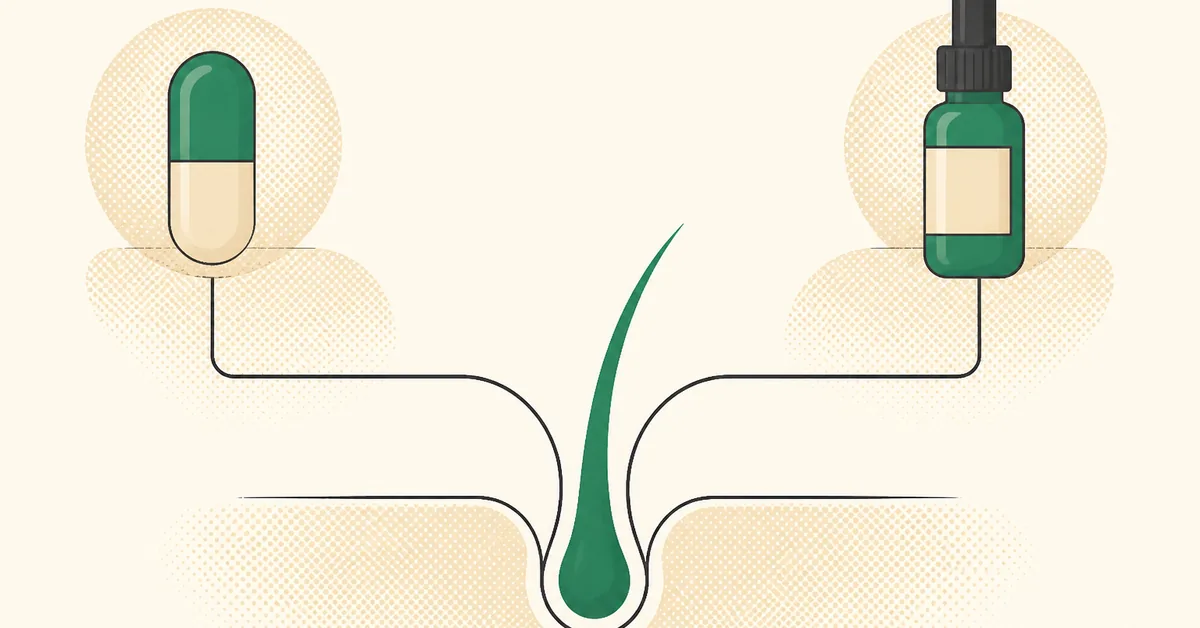
Different levers
If you only remember one thing, make it this: minoxidil and finasteride are not the same kind of thing, and they are not substitutes. They pull two different levers, and the honest starting point is knowing which one matches what you are trying to protect.
›Finasteride works at the source of the process. It lowers the amount of DHT (the androgen that shortens the hair cycle in genetically sensitive follicles) by blocking the enzyme that makes it. Its job is protection: slowing or stopping the thinning that pattern loss would otherwise do over time. It does not regrow what is already gone, and it has nothing to grow at a bald area.
›Minoxidil works at the hair itself. It is a topical stimulant that wakes up and thickens follicles, and it tends to show visible change sooner (often around 3 to 6 months of daily use). Its job is stimulation: encouraging growth, rather than stopping the underlying hormonal process.
Decision by hair stage
The practical version, by where your hair is right now:
›Thinning that is not yet visible from across the room. This is where finasteride does its best work, because there is still plenty of hair to protect. Starting here keeps the most of what you have. Minoxidil may add a little visible thickness sooner, but the protective lever is the one that preserves ground.
›Thinning you can clearly see, hairline receding, crown thinning. Both are reasonable, and many men run both. Finasteride keeps the pattern from advancing while minoxidil encourages some of the thin-crop to thicken.
›Slick, shiny, already-bald areas with no fuzz. Neither med reliably returns this. This is the zone for a transplant, with meds used around it to protect the hair you still have. Spending on stimulants here usually disappoints.
›Any stage, if you are not sure it is pattern loss. Rule out reversible causes (stress, illness, nutrition, traction) with a doctor before committing to a daily habit.
A sensible start
The calm version of which first is the same for almost everyone starting out, and it involves very few steps:
›See a doctor (ideally a dermatologist) for a neutral read. Confirm it is pattern and get an honest assessment of your stage. This replaces an evening of internet anxiety with one short, real conversation.
›Start with one medication at a time. Not both, not on day one. Adding a second med later is much easier to reason about when you know what the first one did on its own.
›Commit to a defined period, normally 3 to 6 months. Both meds need consistent daily dosing to do anything, and neither is a single-week promise. A defined trial period makes the wait tolerable and the review meaningful.
›Review with the same doctor. At the end of the period, judge the facts: photos from baseline, your own honest notes, and what the doctor observes. Then decide continue, adjust, or add the other med.
›If you do not see a result, talk it through before buying anything else. Zeroing in on whether it is working is the whole point of the trial, and a doctor is the person to make that call with.
Combining
Finasteride and minoxidil are not rivals; they are two levers you can pull together once you have given each a fair trial. The usual shape is:
›Protect with finasteride, encourage with minoxidil. If your stage is thinning but clearly present, the combination is the strongest daily-medication package most doctors will talk about: slow the loss while nudging the thinning crop to thicken.
›Why not both from day one? Because you then cannot tell which med did what. Knowing a med is carrying its weight matters when the monthly spend and daily habit are on the line. Trial one, then add the other with a clear baseline for each.
›Keep expectations honest. Even combined, the meds protect and thicken what is still there; they do not rebuild slick-bald spots, and the honest timeline is months. Side effects on either are reported to be uncommon and to resolve in most cases after stopping (finasterides are discussed with your doctor before you start), so the risk discussion is part of the first visit, not something to fear-skip.
›Treat the meds as maintenance, not a one-time fix. Both rely on consistent daily use; when you stop, the benefit generally reverses, and the thinning pattern resumes.
Ready to take the next step?
Start a campaign with a real quote from a real clinic — the community funds the rest.
Start a campaign