
Scarring explained: FUE, FUT, and what heals well
Why extraction scars happen at all
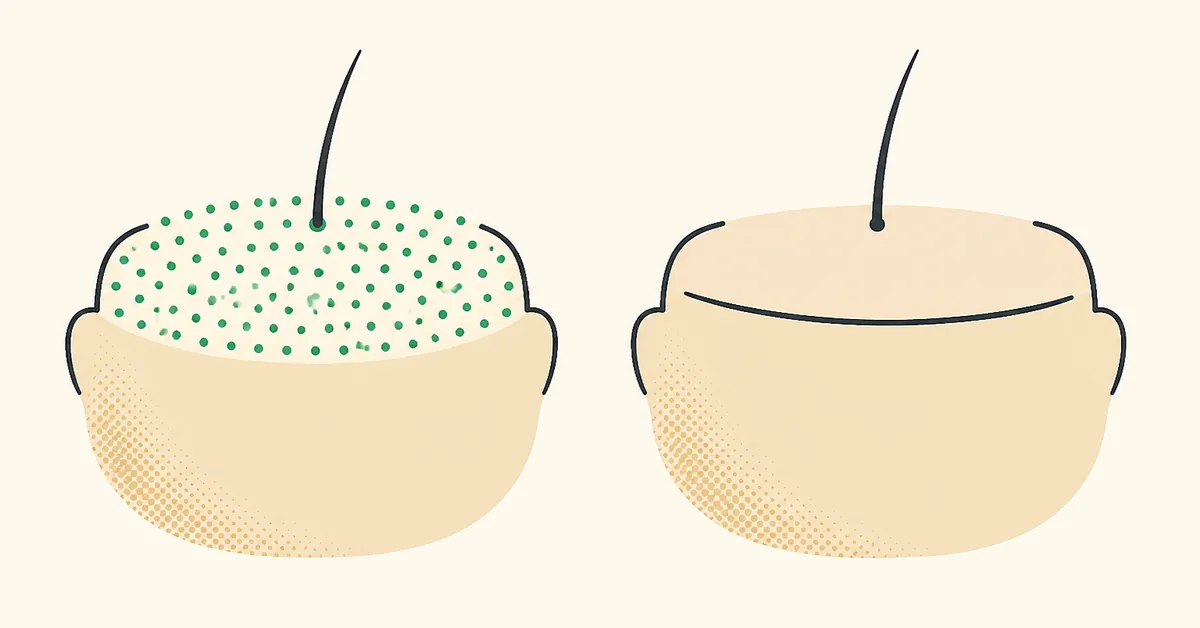
A hair transplant works by moving hair from one part of the scalp (the donor) to another. Moving means cutting, and cutting any skin that heals as a scar - that is the honest physics of the whole thing. There is no scar-free hair transplant, and any clinic that promises one is overstating the case. The amount, shape, and visibility of scarring is the core difference between the two methods, which is why it deserves its own honest explainer. Both methods leave marks; the question is whether those marks are visible under how you actually wear your hair.
FUE vs FUT: the two scar profiles
The two methods take hair so differently that the scars are fundamentally different in kind, not just size.
Healed vs concealed - the distinction that matters
Here is where people get stuck, and it is worth untangling two different words.
What to know before you book
A scar decision is best made early, with your hairstyle in front of you. Keep these as a pre-booking checklist.
The honest takeaway
Scars are the part of a transplant too few people are shown upfront, and the fix is simply to look at them honestly first. Both methods scar - FUE in scattered dots that hide well short, FUT in one line that hides well covered. Decide by how you actually wear your hair, ask to see healed (not fresh) results, and nail the aftercare and any revision terms in writing before you pay. Handled correctly, the scar is something you plan around - not something that decides the plan for you.
Ready to take the next step?
Start a campaign with a real quote from a real clinic — the community funds the rest.
Start a campaign