
Why hair loss happens, and why it isn’t your fault
The biology in one paragraph
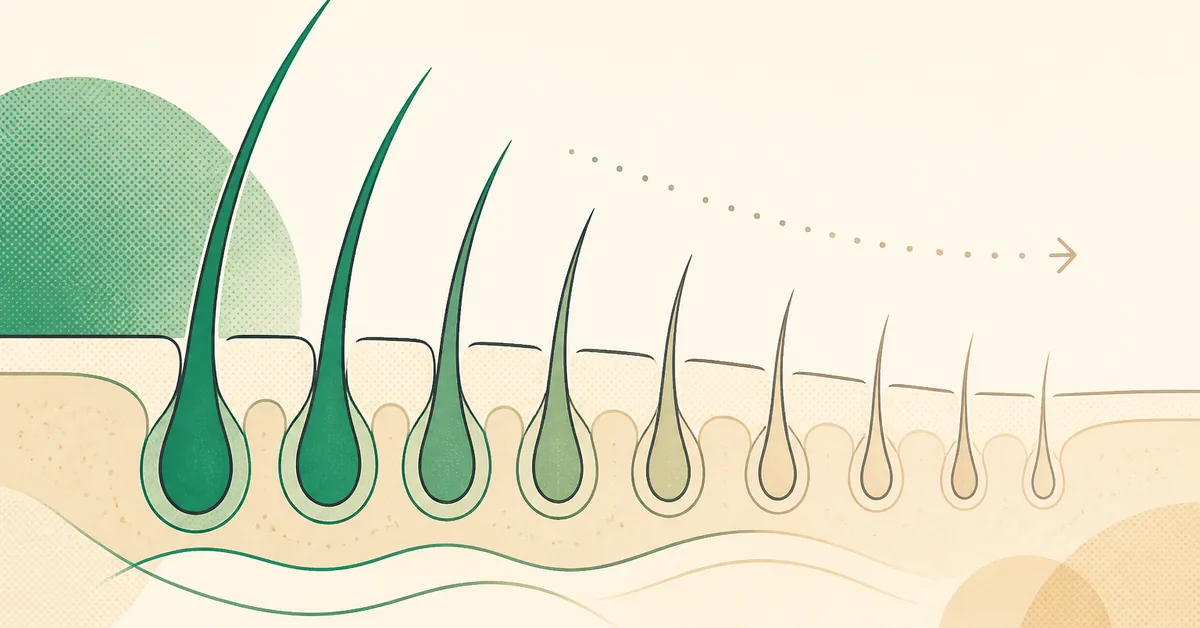
Male pattern hair loss (its medical name is androgenetic alopecia) is the most common form of hair loss in men. At its root, a genetic sensitivity of the hair follicles causes them, under a hormonal signal, to progressively miniaturise: each cycle the follicle produces a shorter, thinner, lighter hair, until the hair stops growing altogether. Crucially, the follicles are not dead; they are in a kind of suspended state. That is partly why treatments can slow, and transplants can restore, what is there. Normal hair loss is 50–100 hairs a day, and pattern baldness is permanent.
What sets the pattern: genetics
Whether you develop pattern loss, and how much and where, is largely written in your genes. A verifiable family history through either parent, not just the mother’s side as an old myth claims, is a strong predictor. This is an inherited sensitivity of the follicles to androgens; the genes do not code for baldness so much as they code for how your scalp responds to the hormones already in your body.
The molecule at the centre: DHT
An enzyme called 5-alpha-reductase converts testosterone into a stronger androgen, dihydrotestosterone (DHT). In a sensitive scalp, DHT binds to receptors in the follicle and shortens the growth cycle. This is the hormonal signal behind miniaturisation. This is the lever that pharmacotherapy and the whole field of hair restoration act on. Not everyone with high DHT loses hair; the sensitivity matters as much as the molecule.
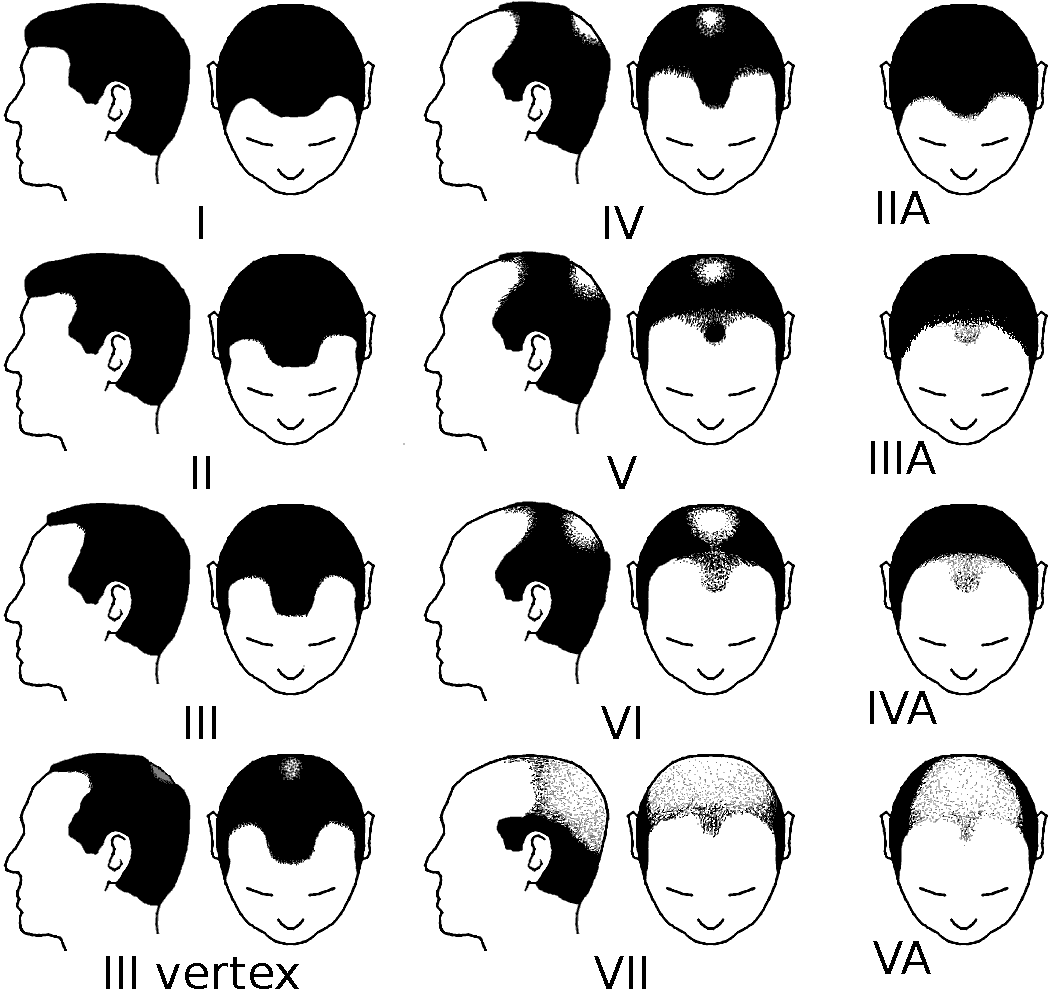
The Norwood scale
The scale that patterns male hair loss into stages. It is not a diagnosis, but a common reference point that clinics use, so it helps to understand it before a consultation.
What is NOT your fault
The takeaway
Pattern hair loss is a normal, genetic-and-hormonal process that most men will encounter. It is not a character flaw, a hygiene failure, or a signal that you are losing in any broader sense. But the fact it is natural does not mean you are powerless: understanding the biology is the first step to choosing calmly and without pressure whether, and when, to act.
Ready to take the next step?
Start a campaign with a real quote from a real clinic — the community funds the rest.
Start a campaign